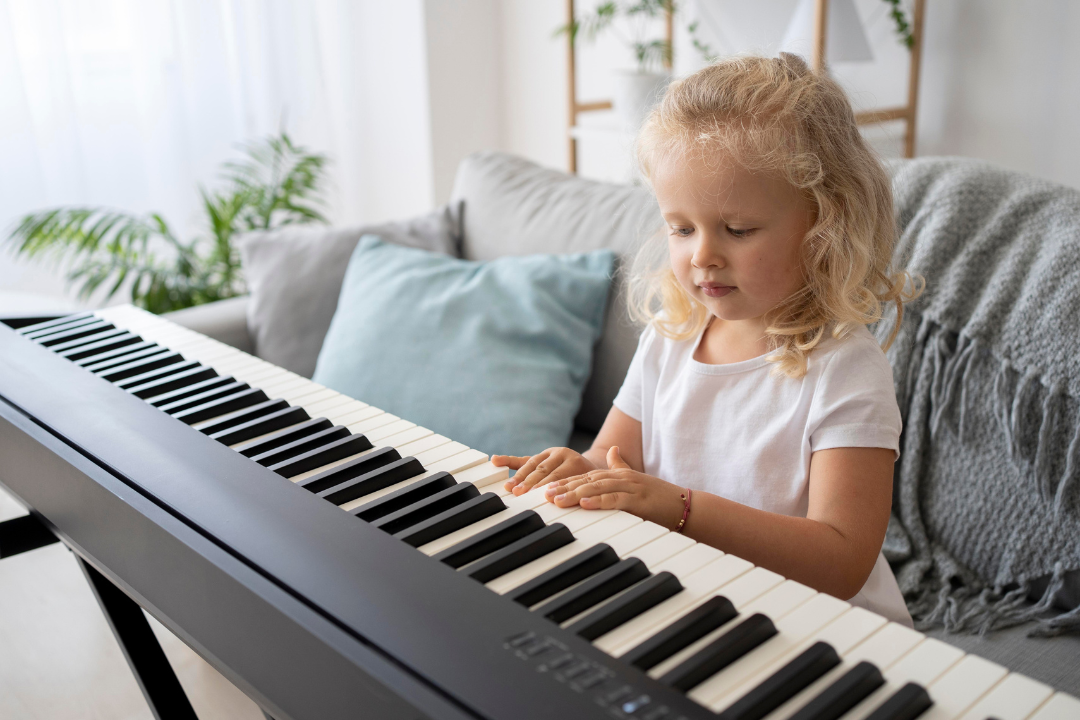
The growing interest of parents in enrolling their children in piano lessons for kids in Singapore is quite evident, as piano lessons offer much more than musical skills. Piano lessons quietly shape how they think, listen, and understand the world around them. When kids play piano, they also learn important life lessons that help them grow into responsible and confident individuals.
In this article, we will explore the 5 lesser-talked-about life lessons kids learn from playing the piano:
Listening Is Just as Important as Speaking
When kids learn piano, they understand that music is not only about pressing keys, but it is also about listening carefully. Piano lessons train kids to listen carefully to the sound of each note, the rhythm, whether the music flows smoothly, and even their teacher’s instructions. Gradually, they learn that listening closely helps them play better. This teaches kids an important life lesson: good listening matters. Over time, children become good listeners in conversations, classrooms, and relationships.
Small Details Make a Big Difference
In piano playing, every tiny detail matters. One wrong note, a slight change in timing, can affect the whole song. At first, these details seem unimportant, but over time, children understand how small details make a big difference. This lesson teaches kids to pay attention to little things. It helps children in school and daily life. They begin to notice instructions, spellings, and small responsibilities carefully. They realize that success is not only about big efforts but also about doing small things the right way.
Mistakes Are An Essential Part of the Learning Process
In a piano learning journey, mistakes happen all the time, and it is quite normal. Missing beats, wrong notes, or forgotten keys are not a failure; they are a part of learning something new. Piano lessons help children understand that mistakes are normal and are part of the learning process. As they practice, they learn to fix mistakes and try again. Over time, children become less afraid of making mistakes and more focused on learning from them. This mindset helps kids handle errors better in school, friendships, and new experiences.
Effort Can Be Enjoyable
Initially, when kids start learning piano, practice feels like hard work. But as they improve, efforts begin to feel rewarding instead of tiring. Playing a song better than yesterday brings a sense of happiness and satisfaction. Through piano lessons, kids learn that trying again, improving little parts, and finally playing a song smoothly can actually feel fun. This teaches them that working toward a goal can be enjoyable and helps them later in life.
Commitment Matters Even When It’s Not Fun
There are days when kids may feel bored or tired and may not want to practice. But regular lessons teach them to show up even when motivation is low. When children practice on days when they don’t feel like it, they learn that improvement comes from being regular and committed and not from feeling excited all the time. This builds a sense of commitment and responsibility among them and helps in everyday life. They learn to finish homework and complete tasks even when they don’t feel motivated.
Conclusion
Piano lessons teach important life lessons that stay with them for a long time. Each practice session teaches more than just notes and melodies. From focusing deeply to listening carefully and staying motivated, these lessons shape how children approach life. So, piano lessons for kids are not just an investment in music but an investment in their future.
admin_piano