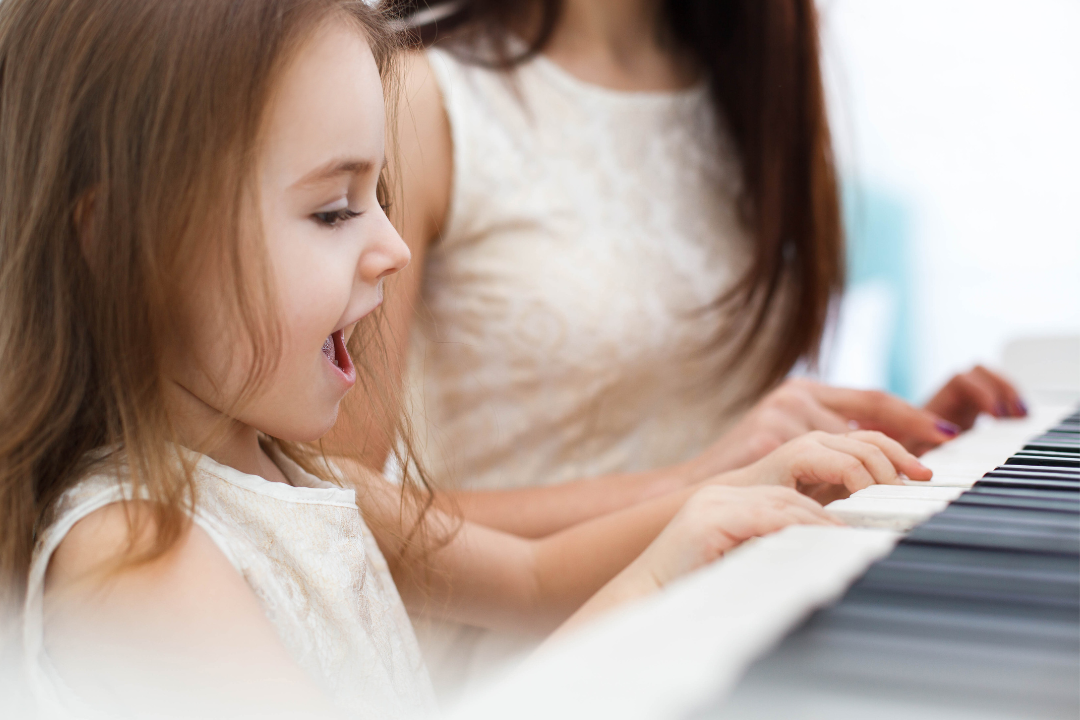
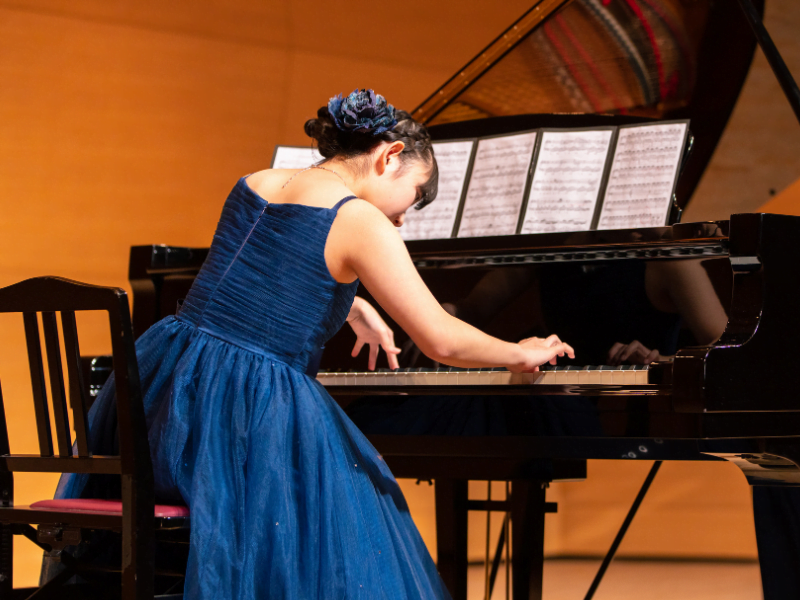
Discipline is one of the most important life skills a child or adult can develop. When we think of discipline, most often, things like strict schedules, firm guidance, and heavy workloads come to mind. Parents often look to sports and academics to teach discipline. Sports and academics are great for structure, rules, and competition, but piano lessons offer something different: a gentle, personal, and long-lasting form of discipline.
Let’s explore why piano lessons stand out as an effective discipline-building activity:
Piano Teaches Respect for the Process Over Results
In many phases of life, people focus on the outcome—good grades, trophies, or winning scores. Piano lessons gently teach something different: the journey matters as much as the outcome. Piano progress is subtle and slow. In piano lessons for kids, children learn that efforts today may not show results immediately. A song doesn’t come together in one day. It grows through slow progress, small corrections, and repeated tries. This teaches a deeper kind of discipline and helps learners stay committed even when results take time to show.
Piano Lessons Create a Personal Relationship With Discipline
In sports and academics, discipline comes from the outside. Teachers set deadlines, and coaches set rules. In piano discipline becomes personal. Students realize that no one can practice for them. If they skip practice, they hear it in their playing. If they practice consistently and thoughtfully, they feel the difference in their fingers and improvement in playing. This creates a connection between effort and outcome. Discipline stops feeling like a rule and starts feeling like a choice.
Piano Creates a Personal Routine, Not a Fixed Schedule
Piano lessons encourage students to build a personal routine that fits into their lives, unlike sports practice and academic classes that follow a fixed timetable. Students learn to decide when and how to practice. Some students practice in the morning before school, and others sit at the piano in the evening to unwind. This flexibility teaches learners how to design their own routine instead of following one made for them. This freedom teaches an important form of discipline—self-management.
Piano Trains Emotional Discipline, Not Just Physical or Mental Control
Playing piano is not just about moving your fingers or reading notes; it is also about learning how to guide your emotions. When someone is frustrated or nervous, it shows in their playing—the mistakes increase, and sounds become uneven. Piano lessons gently teach learners to stay steady during challenges and how to sit with those feelings instead of walking away from them. By returning to keys even after the hard session, students build emotional discipline. This skill often carries into everyday life, helping them to respond to challenges with balance and confidence.
Piano Builds Comfort with Repetition
At first, playing the same part of a song again and again can feel boring, but piano lessons turn repetition into progress. It teaches students that repetition is not boring; it is necessary. To play a piece well, the same sections need to be practiced again and again. It teaches learners to stay with one task until it improves, rather than moving to a new one. They learn to stay patient and keep going on even when things don’t work out. This habit of repeating things helps build strong discipline that carries into school, work, and daily life.
Conclusion
There is no doubt that sports and academics are valuable activities to build discipline, but piano lessons build something deeper. Through daily practice, focus, and self-reflection, students learn how to manage time, repeat with purpose, and stay consistent. That’s what makes piano lessons a powerful activity for building discipline among children and adults.
admin_piano