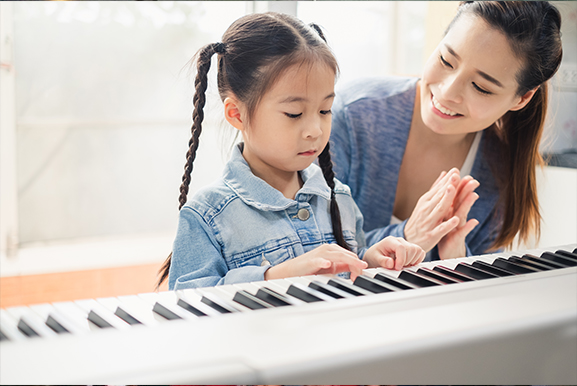
At a young age, children’s minds are highly receptive, curious, adaptive, and ready to learn new things. Introducing piano lessons at an early age may prove extremely effective in developing musical abilities and overall development. Piano lessons for kids not just help in learning notes or playing songs, but they also build a strong foundation that can influence many areas of a child’s life.
Let’s explore how early piano lessons influence musical development in kids:
Develops Musical “Thinking,” Not Just Playing
When kids start learning piano early, they start recognizing patterns even without realizing it. Piano classes for kids do more than teach children which key to press; they help them understand how music works. For example, they start noticing the following:
- Why do certain notes sound good together?
- When does music feel complete or unfinished?
- How does a melody move up and down?
Over time, they learn to predict, explore, and even create music on their own.
Creates a Natural Connection Between Emotion and Sound
Young children don’t see music as a set of rules—they engage with it naturally. Children at a young age feel emotions strongly but do not always have the words to express them. Piano lessons give them a natural way to connect those feelings with sounds. As they play, children start to sense how music expresses different moods, naturally connecting sounds with emotions. With time, this connection becomes natural. Children move beyond playing the right notes—they start playing meaningfully.
Develops an Early Sense of Musical Structure
When children start piano lessons at a young age, they slowly begin to understand how music is organized. Children learn that there is an introduction, a body, and a conclusion within songs, and even simple songs allow children to understand that music isn’t something random but rather something very structured. This early awareness helps children:
- Identify patterns in music
- Understand how music flows naturally
- Learn new pieces easily because “they see the pattern.”
Over time, they don’t just play music but will be able to identify how the music was composed.
Builds Comfort with Performance from a Young Age
When children enroll in piano lessons early, they introduce them to performing. At a young age, kids are less fearful of judgment, which makes it the perfect time to help them get comfortable playing in front of others. As a result, they grow up with:
- Less stage fear
- More confidence in sharing their skills
- A natural comfort with being seen and heard
In simple terms, early childhood piano lessons help children grow into confident performers who feel comfortable in expressing themselves in front of others.
Reduces Fear of Complex Learning Later
As children learn piano at a young age, they become comfortable with skills that may initially appear complex (reading music, using both hands to play, and learning patterns). However, since all these things are slowly taught at an early age, children do not see them as “difficult” because they are being introduced slowly to these concepts. Piano classes make children comfortable with taking on difficult tasks and making future challenges feel easier to handle, both in music and beyond.
Conclusion
Early childhood piano lessons are not meant to develop great musicians; instead, their focus is on how children will experience music. It develops their emotions, their ability to think independently, and the natural way they perceive sound, all in a very subtle manner. Children who begin piano lessons at an early age will not only learn how to play; they will develop a strong, lasting bond with music that will be with them for many years.
admin_piano